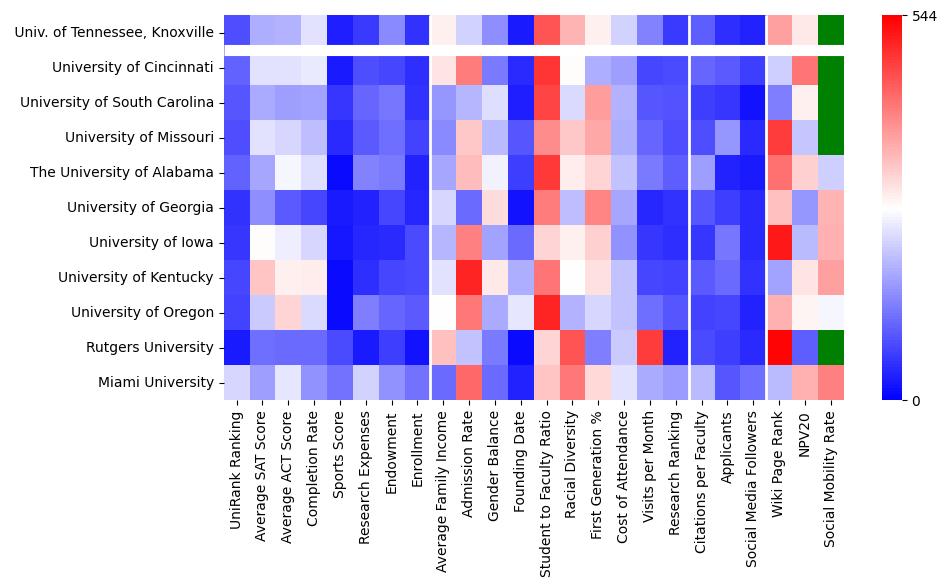
The University of Tennessee, Knoxville (UTK), established in 1794, stands as the flagship campus of the University of Tennessee system. Nestled in the vibrant city of Knoxville, this public research university has a storied history that reflects its commitment to education and community engagement. UTK has evolved significantly over the centuries, now serving a diverse student body of over 30,000 students. Its picturesque 910-acre campus combines historic architecture with modern facilities, offering a blend of tradition and innovation that characterizes the Volunteer spirit.
What sets UTK apart is its strong emphasis on research and community service. As a land-grant university, UTK is deeply committed to making a tangible impact in Tennessee and beyond. It has a robust partnership with the Oak Ridge National Laboratory, enabling cutting-edge research opportunities for students and faculty. The university’s “One UT” initiative fosters collaboration across its campuses, enhancing educational and research endeavors. Furthermore, the Pride of the Southland Marching Band and the iconic Volunteer football program create a vibrant campus life, steeped in tradition and school spirit.
Academically, UTK is recognized for its comprehensive programs and rigorous curriculum. The university is particularly renowned for its Haslam College of Business, Tickle College of Engineering, and Herbert College of Agriculture, all of which consistently receive high rankings nationally. The school’s College of Law and College of Education, Health, and Human Sciences are also distinguished for their contributions to professional fields. UTK's focus on experiential learning, internships, and global study programs prepare students for successful careers, with an emphasis on practical skills and leadership.
However, UTK faces challenges common to many large public universities, including balancing enrollment growth with maintaining a personalized educational experience. Some students have expressed concerns about class sizes, which can be large, particularly in introductory courses. Additionally, while the university has made strides in increasing diversity and inclusion, there remains a need for continued progress in these areas. Nonetheless, UTK's ongoing efforts to address these issues reflect its commitment to providing a high-quality education for all students.